Tamil Nadu household bill guide
Why Is My TNEB Bill High? 6 Checks to Find the Cause
If a TNEB bill is higher than expected, compare its billing days, units per day, reading type and adjustment lines before assuming a tariff change. This guide gives you a safe order for checking the bill and deciding what to ask the official service channel.
- Compare the same service and billing dates
- Separate higher use from a longer period
- Check readings and adjustment lines
Quick answer
Why Is My TNEB Bill High? Compare the bill before guessing
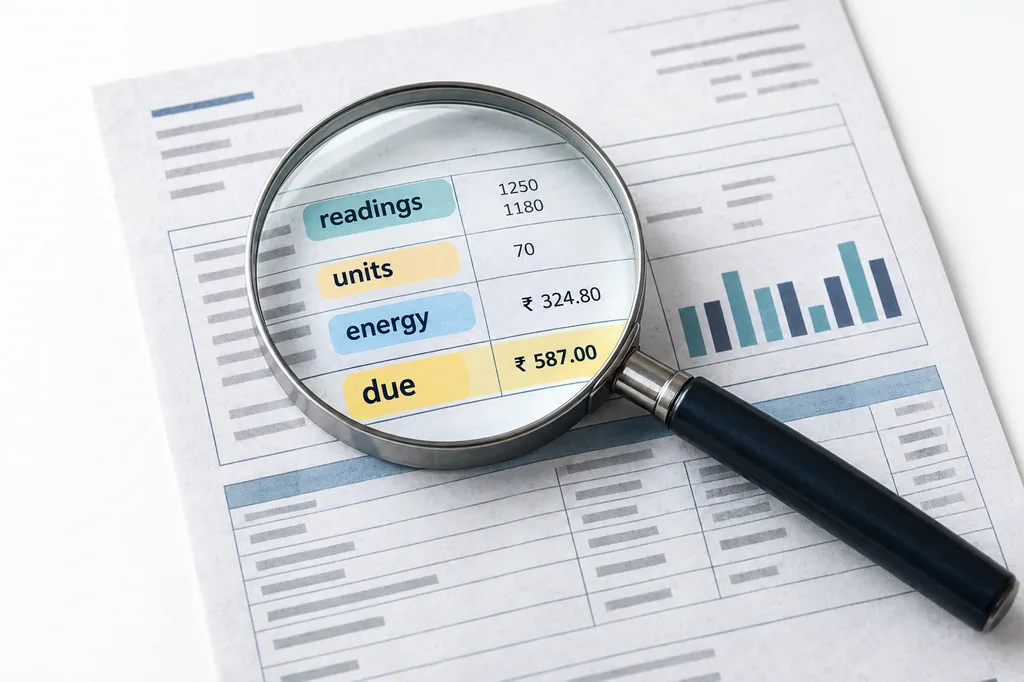
If you are asking why is my TNEB bill high, compare the same service and billing dates first. Then compare units per day, not only the total units or rupee amount. Check the meter values, whether the reading is actual or assessed, and any arrears, credits or adjustments. More days, higher use, a corrected estimate and a separate bill line need different next steps; do not assume every increase is a tariff change or meter fault.
The issued bill and official service information control account-specific charges and complaint handling. This guide organizes checks but cannot verify your account.
Four checks to start
- Match the service and billing dates on both bills.
- Compare billed days and units per day.
- Check reading values and actual or assessed status.
- Separate energy charges from arrears and adjustments.
Compare like with like
A bigger bill total does not always mean higher daily use
A billing period can be longer or shorter than the last one. Divide each bill's units by its billed days to compare use. These are simple examples, not TNEB tariff values.
| Example period | Consumed units | Billed days | Average per day |
|---|---|---|---|
| Earlier bill | 360 units | 60 days | 6 units per day |
| New bill | 420 units | 70 days | 6 units per day |
| What changed? | 60 more units | 10 more days | Daily use stayed the same |
Use the printed dates rather than assuming every cycle is identical. A daily average compares use; it does not recalculate the official bill.
Possible causes
Six reasons a TNEB bill may look unusually high
Start with entries you can verify. One comparison can hide a longer period or a correction.
1. The bill covers more days
A reading date can shift, leaving one statement with more days than the last. Total units and charges can rise while daily use stays steady. Compare the printed start and end dates.
What to check: Compare units per billed day.
2. Household use changed
Longer air-conditioner hours, a pump, a geyser, guests or a newly used appliance can change consumption. Seasonal weather may also matter. Compare routines during the billed dates.
What to check: List what changed and when.
3. The reading was assessed or estimated
If the meter could not be read, a statement may use an assessed value. A later actual reading can include a correction. Look for a status or adjustment and compare the display with the billed value.
What to check: Keep the bill and a dated photo when safe.
4. Reading details do not match
A bill uses readings for a particular service and date. A digit may be misread, a meter replaced, or the comparison may use the wrong service. Match the meter details to the statement.
What to check: Compare digits without opening the meter enclosure.
5. A balance or adjustment was carried forward
The amount may include an unpaid balance, credit, correction or delayed payment entry. These can change the net due without changing current-period units.
What to check: Compare arrears, credits and adjustments.
6. The service category or connected load differs
Do not compare a domestic estimate with a commercial or shared service. A category update or shared-area load can affect the result. Suspected wiring faults need qualified help; never open a meter seal or touch exposed conductors.
What to check: Confirm the category and which loads the connection supplies.
Read the meter safely
Check whether the billed reading matches the meter
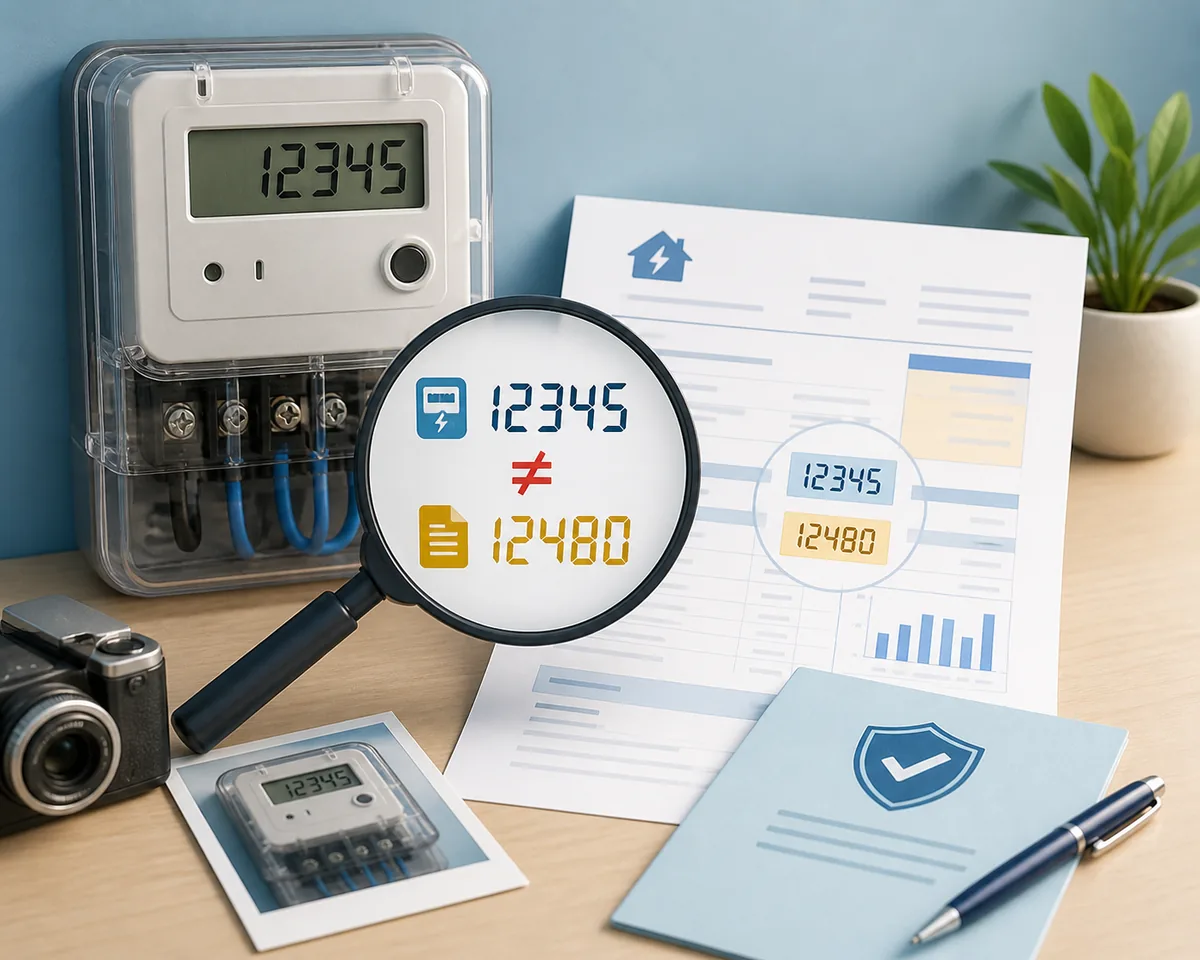
Find the previous and current reading, dates and meter number on the statement. A meter replacement or assessed reading can change what appears, so treat a status remark as something to verify rather than proof of an error.
When safe, take a dated photo and compare its display and meter identifier with the bill. Do not remove a cover, break a seal or handle wiring. A higher total can still be correct if the previous bill was estimated, the period was longer or use changed; record the mismatch without diagnosing the meter yourself.
A photo is supporting evidence, not an official meter test. Do not post a full consumer number or account document publicly.
Read the statement
Separate electricity use from the amount carried into the bill
Check the bill as a set of fields instead of trying to explain the final total with one unit rate. Labels vary, so use the description printed on your own statement.
| Bill field | What it helps you verify |
|---|---|
| Billing dates | How many days the current statement covers |
| Previous and current readings | The meter values and the date of each value |
| Reading status | Whether the statement marks a reading actual, assessed or adjusted |
| Units consumed | The period usage shown by the bill |
| Energy or tariff lines | The charge calculation for the service category and effective period |
| Arrears, credit or adjustment | Amounts carried forward or corrected from another period |
| Net amount and due date | The current official payment instruction for this account |
If units rose but billed days also rose, compare daily units first. If daily use stayed close but the amount changed, inspect non-energy entries and category. A calculator cannot see account history or adjustments, so use the formula guide only for arithmetic.
A practical check sequence
What to do when a TNEB bill is higher than usual
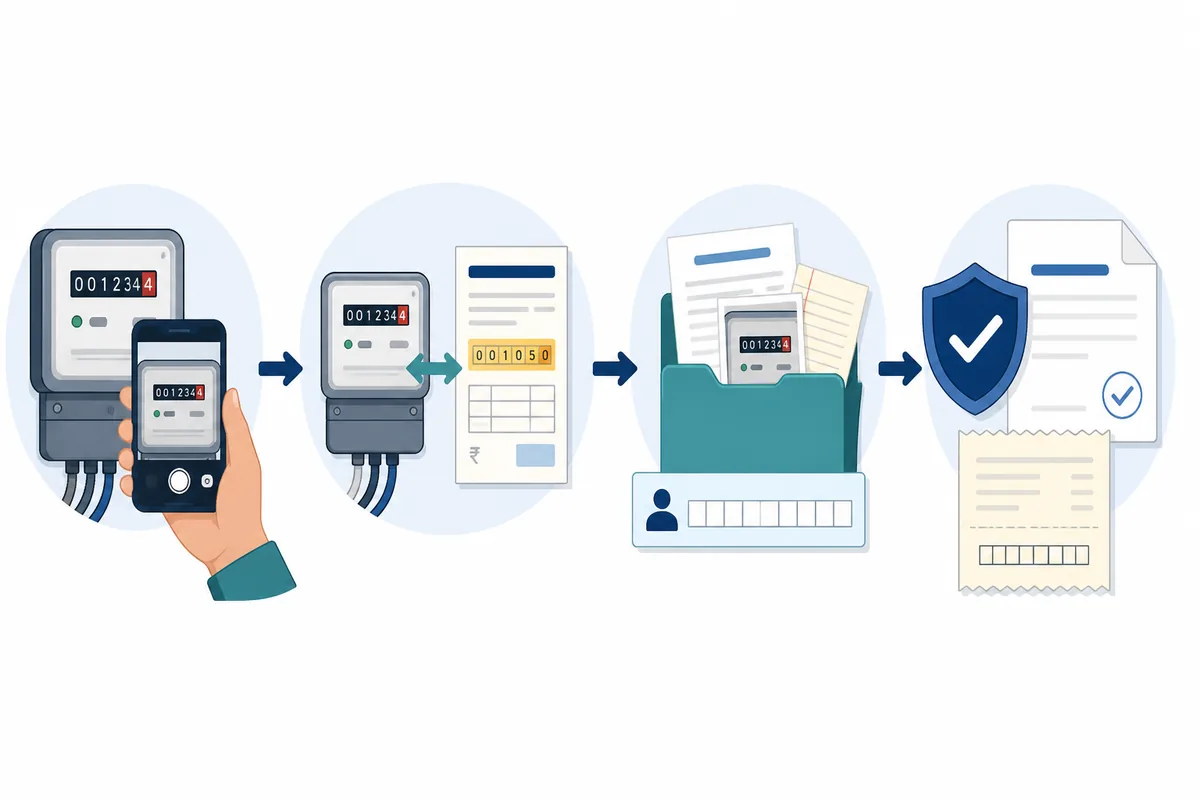
Work from simple records toward questions that need official help. Keep a short note of what you find.
Five checks before you contact support
- Confirm both bills belong to the same service and category.
- Write down dates and billed days for each statement.
- Compare units per day and list any change in routine.
- Match meter number, readings, dates and reading status.
- If a mismatch remains, save bills and a concise note for the official channel.
Official verification
When the bill still does not add up
Use current official TANGEDCO or TNPDCL service information for bill status and complaints. Its consumer FAQ directs suspected meter-recording errors to an official complaint route. Describe the bill month, reading date, billed and displayed values, and actual or assessed status; save any acknowledgement. Never share an OTP, UPI PIN, card PIN or remote-access code. A complaint does not automatically change a due date, so ask the official channel how to handle the account while it is reviewed.
Avoid these shortcuts
Common mistakes when a bill is higher
Comparing totals without dates
A longer period can include more units even when daily use is unchanged.
Assuming every increase is a tariff hike
Check readings, service category and adjustments before blaming a rate.
Treating an estimate as a confirmed fault
Verify the next actual reading; do not open sealed equipment or share account secrets.
Common questions
Why Is My TNEB Bill High? FAQ
Why is my TNEB bill high when my daily usage seems the same?
Compare billed days and units per day, then check assessed readings, arrears, credits and adjustments. A longer period or a carried-forward line can raise the total without a similar change in daily use.
Can a longer billing period make my TNEB bill higher?
Yes. More billed days can include more units and charges. Compare the printed start and end dates and calculate units per day before judging whether household use increased.
How do I compare two TNEB bills fairly?
Make sure both bills cover the same service and category. Compare dates, billed days, units per day, reading status and each adjustment line, not only the final amount.
What should I do if the TNEB meter reading looks wrong?
Check the meter number and reading date, keep both bills, and take a dated photo when safe. Do not open or touch sealed equipment. Use the official complaint route for a suspected recording error.
What does an assessed or estimated meter reading mean?
It indicates that the statement may not use a normal in-person actual reading for that period. Check the bill notes and whether a later actual reading or correction is included; ask the official channel if the explanation is unclear.
Does a high TNEB bill always mean the tariff changed?
No. Billing days, units used, reading corrections, service category, arrears, credits or other adjustments can change the amount. Verify the current official tariff information only after checking those fields.